
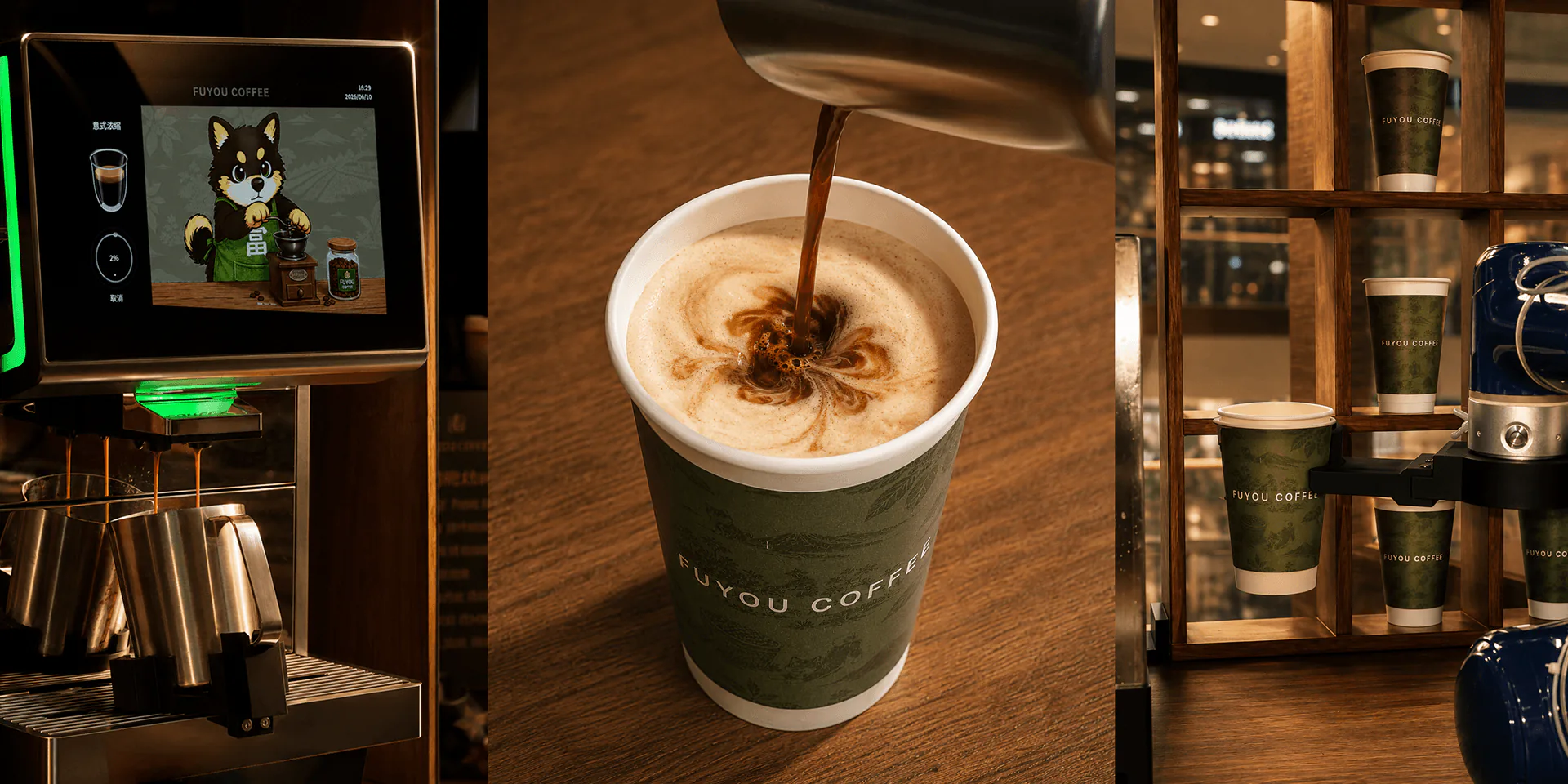
Two very different ways to sell coffee
A traditional coffee shop and a robotic coffee kiosk both serve coffee to people on the move, but the economics, staffing, and space behind them are fundamentally different. Understanding those differences helps you choose the model that fits your location, budget, and operating capacity.
What a traditional coffee shop requires
A conventional café is built around a staffed storefront. Its costs and complexity scale with the space and the team needed to run it.
Storefront buildout
A lease, interior fit-out, counter, seating, and customer area—all sized for a physical café experience.
Staffing
Trained baristas and counter staff across opening hours, including scheduling, training, and turnover.
Specialized equipment
Espresso machines, grinders, refrigeration, and POS—each requiring maintenance and skilled use.
Ingredient waste
Fresh milk and prepared ingredients have limited shelf life, creating routine waste in lower-volume locations.
What a robotic kiosk changes
A robotic kiosk compresses the café into a compact, self-service unit. It trades the experience of a staffed café for consistency, lower labor, and a much smaller footprint.
Compact footprint
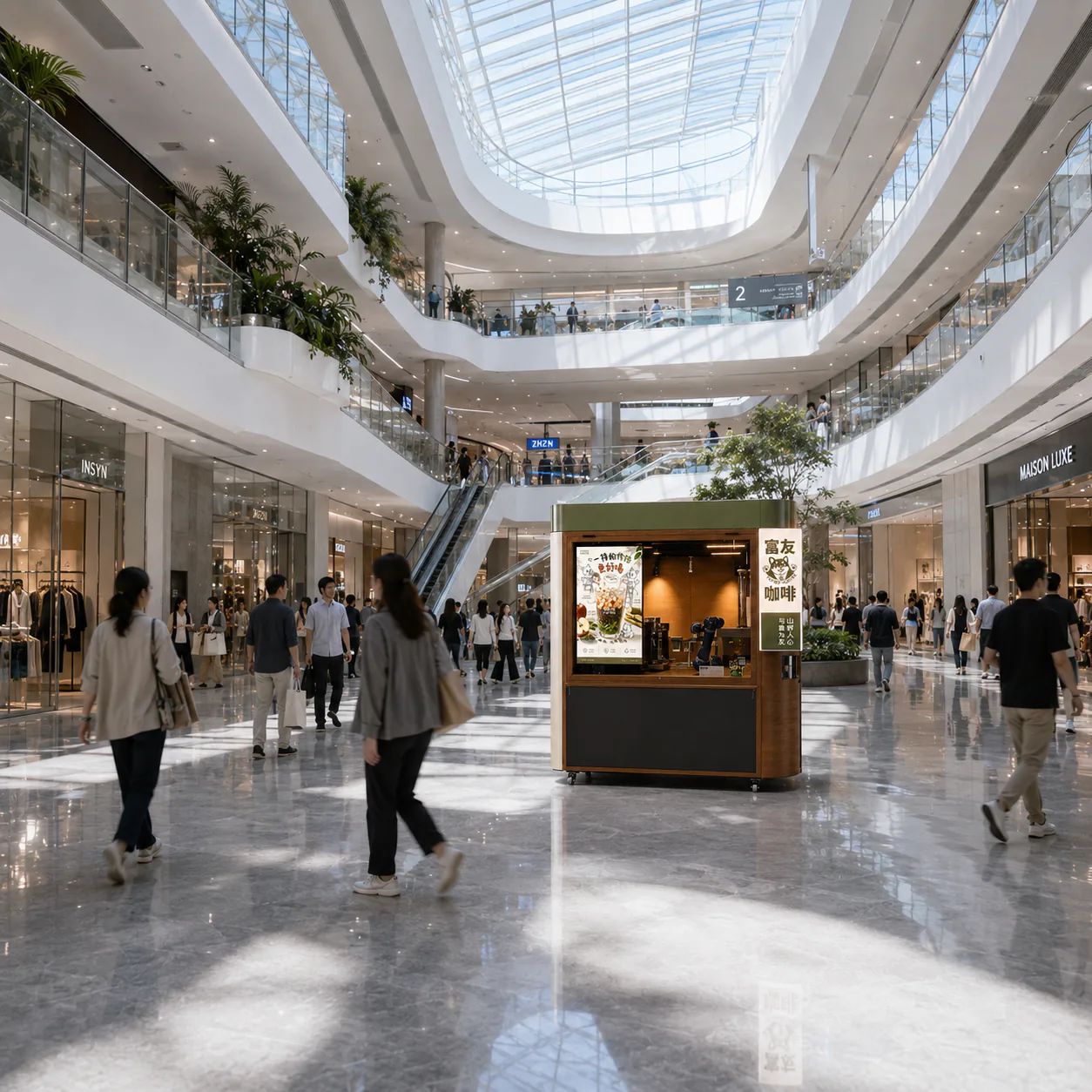
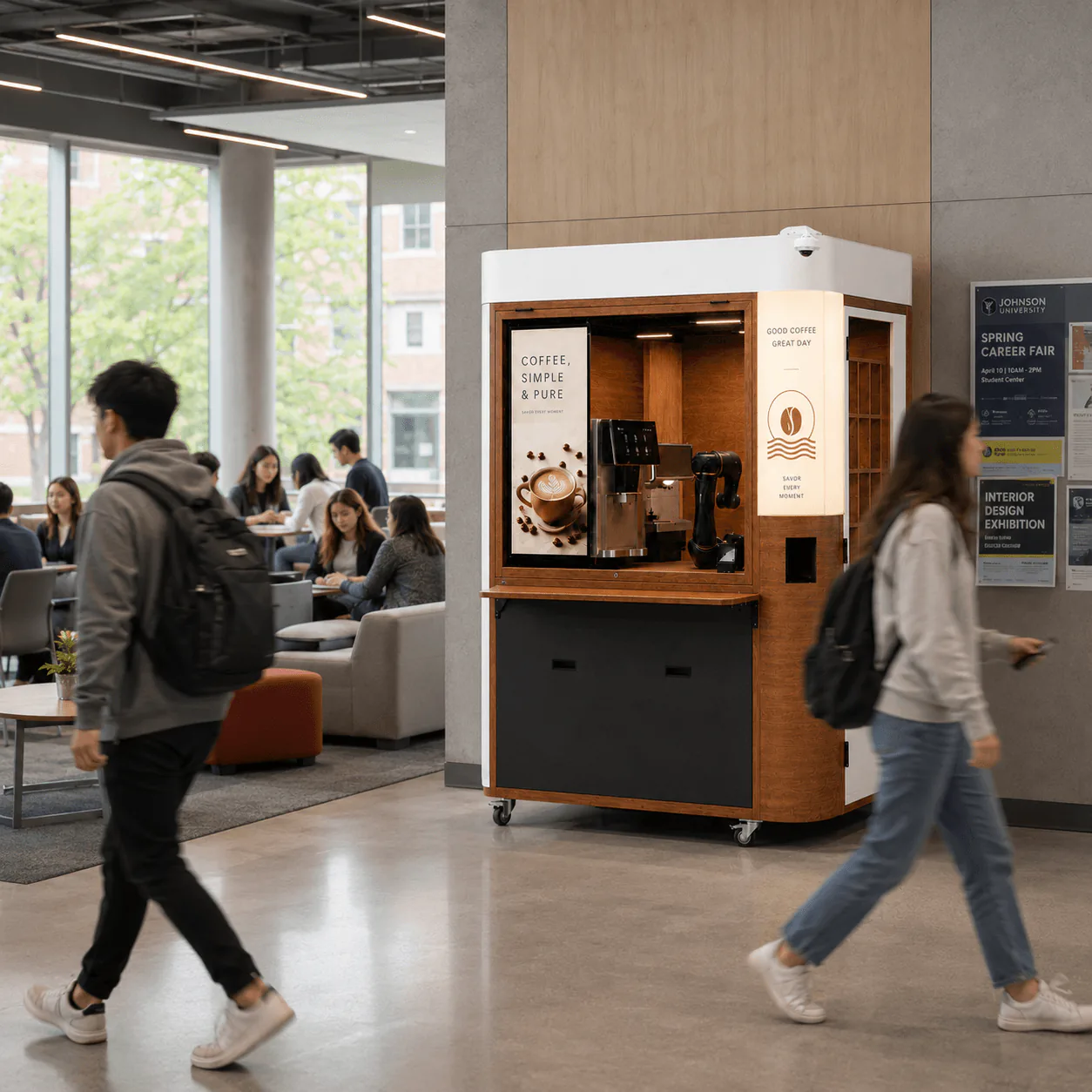
Roughly 2.9 m² is typical—small enough for malls, offices, campuses, and transport hubs where a full café would not fit.
Low labor
No on-site barista. A daily restocking and inspection visit replaces a full staffing roster.
Consistent output
Every drink is prepared to the same recipe by the machine, removing variance between staff or shifts.
Lower running cost
With less space and fewer people, ongoing costs are driven mainly by rent and ingredients rather than payroll.
Where they differ most
- Upfront cost — a kiosk is a single equipment investment; a café involves buildout, furnishings, and machines.
- Labor — a café needs a team across all opening hours; a kiosk needs a short daily service visit.
- Footprint — a kiosk occupies a few square metres; a café needs a leased storefront.
- Experience — a café offers atmosphere and human service; a kiosk offers speed and consistency.
- Scalability — kiosks are easier to replicate across multiple sites because each unit needs minimal staff.
Model the numbers yourself
Compare the two models directly with our cost and return calculator—adjust rent, labor, cup volume, and price to see how payback shifts.
Open calculatorWhen each model fits
A traditional café suits destinations where atmosphere, seating, and skilled service are part of the offer. A robotic kiosk suits high-traffic locations where speed, consistency, and low operating cost matter more than a lounge experience.
Bottom line
Neither model is universally better. If your location rewards atmosphere and dwell time, a café makes sense. If it rewards throughput and low overhead, a robotic kiosk is usually the more efficient choice. For many operators, the two complement each other rather than compete.
.bjYHYPFC.webp)